





Article: The Entrupy Effect: AI Is Redefining Luxury Resale Trust

The Entrupy Effect: AI Is Redefining Luxury Resale Trust
The Scale of the Counterfeit Problem in Luxury Resale
In 2025, Entrupy scanned $3.7 billion worth of luxury goods and flagged $294 million as potentially fake. That single data point captures the state of luxury resale: counterfeiting is the market's defining challenge, not a fringe concern.
The broader numbers are staggering. According to the OECD, the global counterfeit goods trade reached USD $467 billion in 2021, with clothing, footwear, and leather goods accounting for 62% of seized counterfeits. The problem keeps accelerating.
Here is the part most people miss: 25% of fake luxury purchases in the U.S. happen unintentionally. According to Red Points, one in four buyers had no idea they purchased a counterfeit. Authentication is not just a seller's tool; it is consumer protection.
With the luxury resale market valued at $37.95 billion CAD-equivalent in 2025 and projected to reach $60.11 billion by 2030, according to The Business Research Company, the authentication challenge grows more urgent every quarter. AI-powered authentication, led by Entrupy, is the infrastructure that makes this growth trustworthy.
What Entrupy Actually Does, and Why 99.86% Accuracy Matters
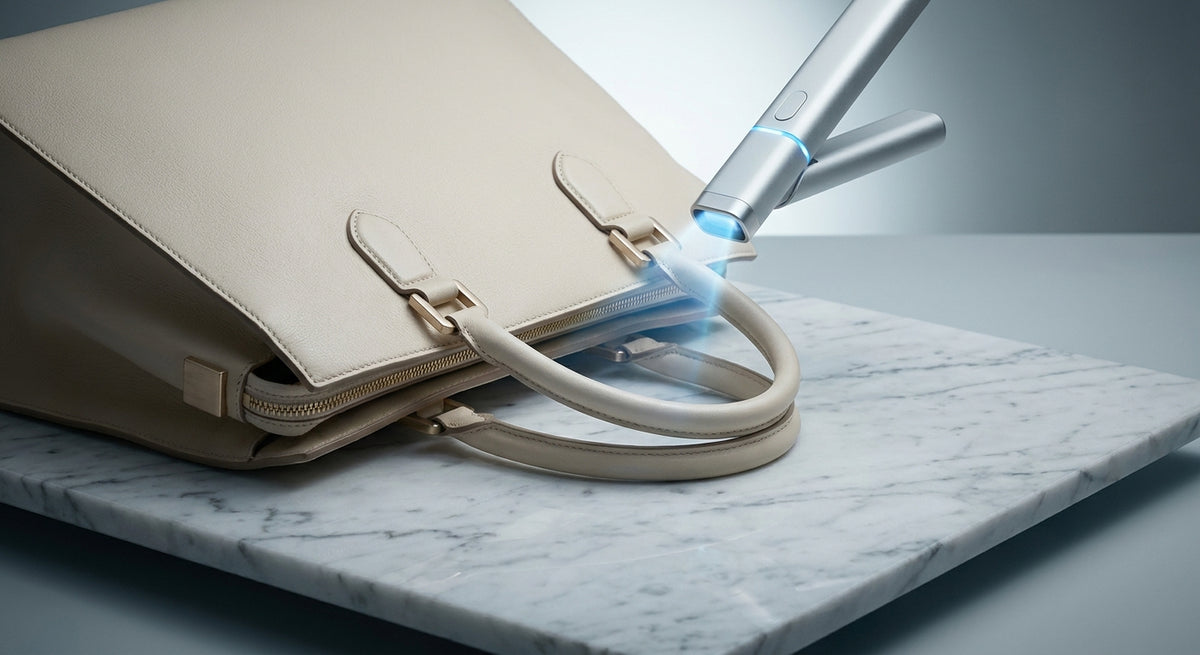
Entrupy's technology rests on a database of over 90 million reference images, capturing both authentic and counterfeit products in microscopic detail. Deep learning algorithms analyze each submitted item against this library, and every new scan strengthens the system. Entrupy CEO Vidyuth Srinivasan has described it as "almost like a co-op system," according to WWD, where each user's submission improves collective accuracy for everyone.
The accuracy trajectory tells its own story. When Entrupy launched in 2016, it operated at 93% accuracy. By 2025, that figure had climbed to 99.86%. This is not a static marketing claim; it is the result of continuous model improvement trained on billions of dollars' worth of real-world data.
The company uses a hybrid authentication model. AI processes approximately 90% of items automatically, clearing them at a confidence score above 99.5%. The remaining 10% are flagged for human expert review, according to QY Research. This combination of machine speed and human judgment has become the industry's winning strategy.
Every Entrupy Certificate of Authenticity comes with a financial guarantee: if the company gets it wrong, it covers the costs for a full year. Most resale shoppers are unaware this guarantee exists, but it fundamentally changes the risk equation for buyers.
Why is AI necessary at all? Modern "superfakes" are the reason. Stitching thread counts, hardware engravings under 10x magnification, material textures: these details are now indistinguishable to the human eye. Only AI-based microscopic image analysis can detect them consistently, making traditional expert-only authentication insufficient on its own.
Brand-Level Fake Rates: The Numbers Luxury Shoppers Need to See
Entrupy's State of the Fake 2026 report breaks down fake rates by brand, and the numbers are sobering. Louis Vuitton accounted for 33.14% of all luxury items submitted to Entrupy in 2025, the highest volume of any brand. Of those submissions, 54.1% came back as fake. More than one in two Louis Vuitton items submitted could not be verified as authentic.
Dior followed with a 42.5% fake rate. Balenciaga came in at 36.2%. These are not obscure labels; they are among the most sought-after names in luxury, and counterfeiting risk is proportional to demand.
Apparel has become the new authentication battleground. According to Fashionista, nearly 1 in 3 clothing items submitted to Entrupy in 2025 was classified as unidentified. This marks a significant shift beyond handbags, which have traditionally dominated authentication conversations. Fear of God Essentials topped the apparel list with a 95.75% fake rate, an extreme but telling example of the counterfeiting crisis in streetwear and contemporary fashion.
Across all categories, 8.1% of luxury items submitted to Entrupy came back unidentified, as reported by FashionNetwork. That is nearly 1 in 12 items in the resale pipeline that could not be confirmed authentic.
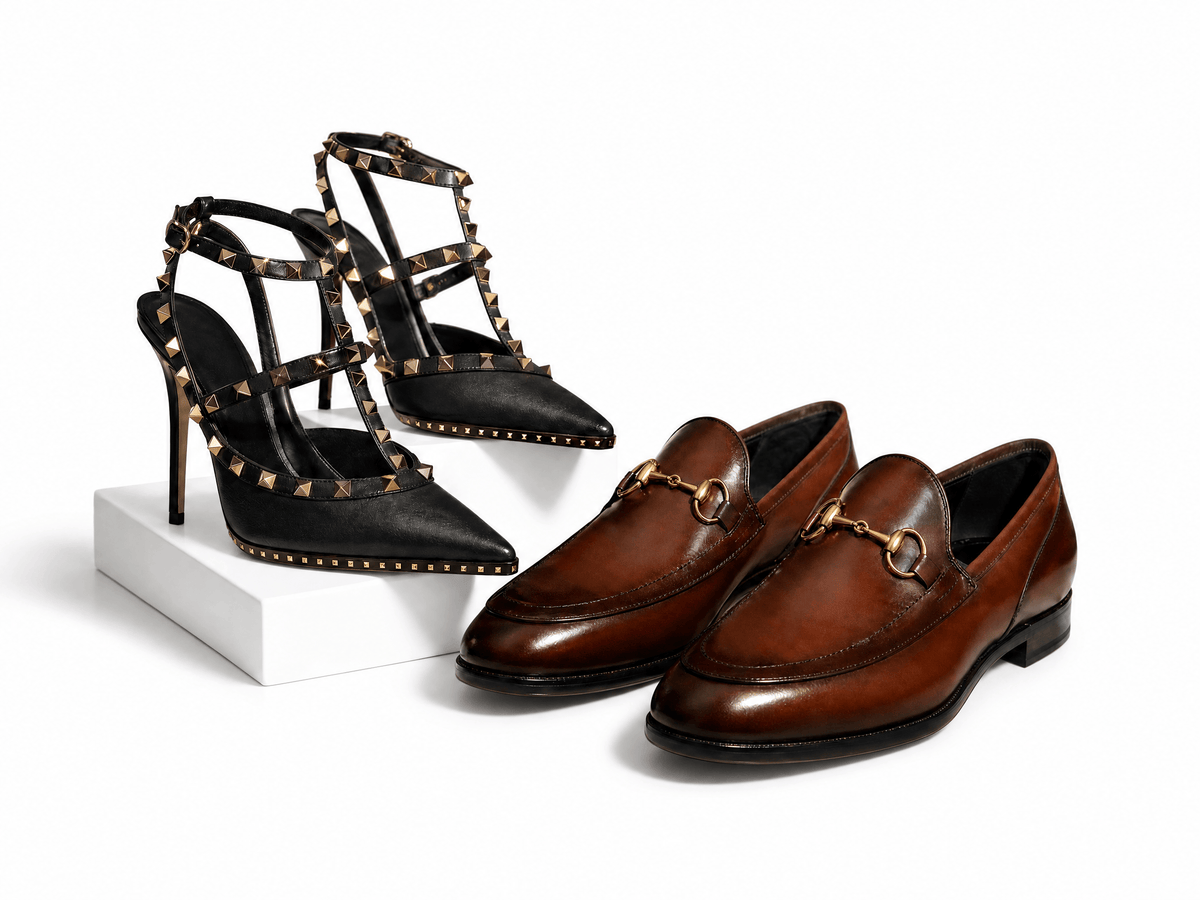
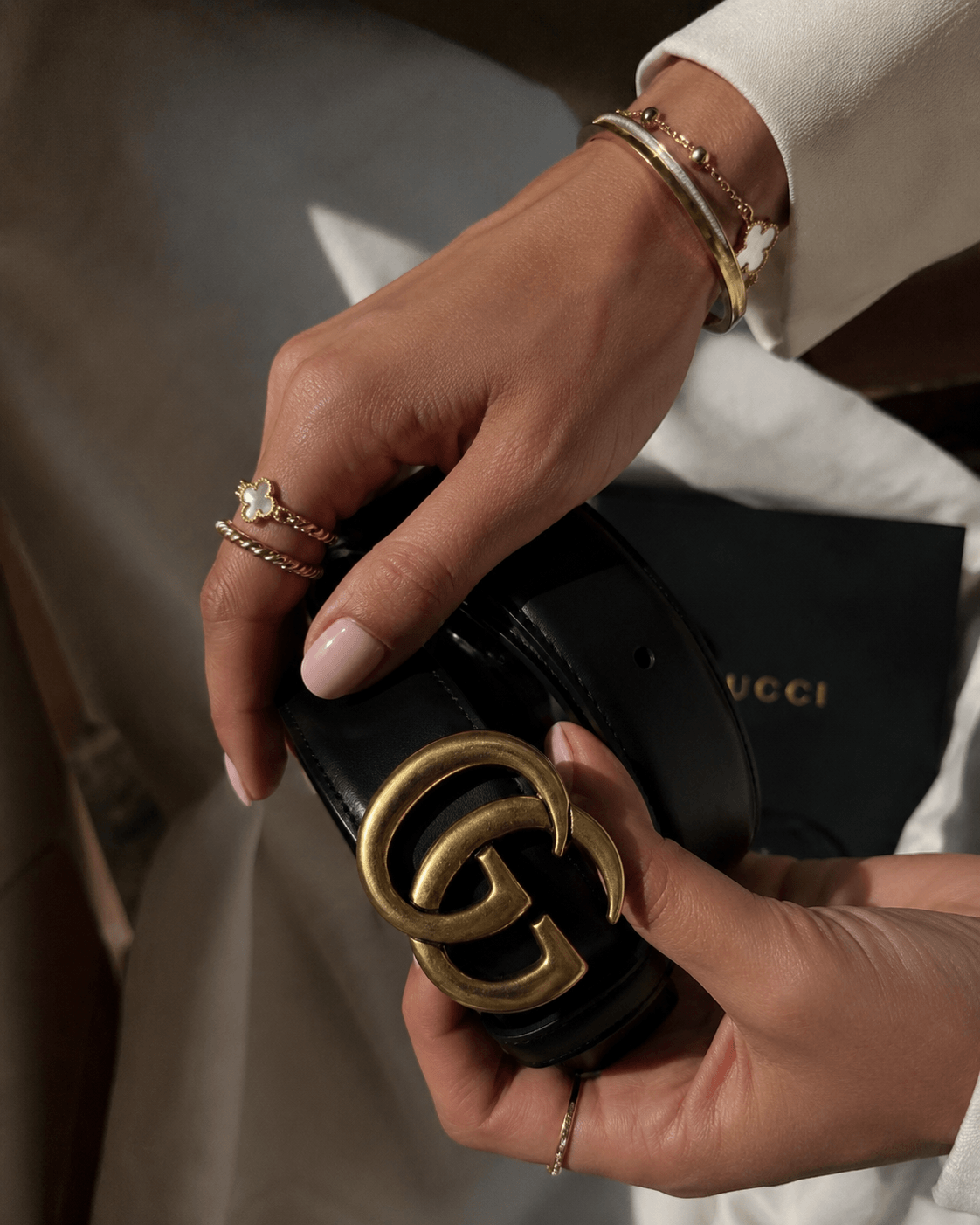
Gucci is another brand where documented fake rates make authentication essential. Our authenticated Gucci collection at PreLoved & Luxe includes loafers, accessories, and apparel, each scanned and certified through Entrupy before listing. For a brand with well-documented counterfeiting exposure, that verification step separates a confident purchase from a gamble.
From Boutiques to Airports: Entrupy's Institutional Expansion
Entrupy's reach now extends far beyond independent resellers. The company serves as an official authenticator for TikTok Shop, signalling that platform-level adoption of AI authentication has arrived. When a social commerce platform with hundreds of millions of users requires Entrupy certification, it sets a new baseline for the entire industry.
In July 2026, Entrupy expanded into the U.S. pawn industry through a partnership with Jewelers Mutual Group and its agency JMIAP, as reported by Luxury Daily. This makes AI authentication available at the point of acquisition and lending for pawnbrokers nationwide, a sector where authentication has historically relied on individual expertise alone.
Entrupy's Certificates of Authenticity are now visible at almost every international airport worldwide, according to the company's State of the Fake 2026 report. That institutional presence positions AI authentication as global infrastructure, not a boutique add-on.
The business case is equally compelling. A Q1 2026 case study from a European second-hand luxury marketplace with €180 million in annual GMV found that deploying Entrupy's API-based authentication reduced manual verification labour costs by 73% while increasing listing velocity. Entrupy also launched MarketEdge in 2025, enabling resellers to identify, grade, and price products instantly, transforming inventory processing speed and accuracy.
When the same certification trusted by airports, TikTok Shop, and major pawn networks backs a purchase from a luxury consignment boutique, the trust transfer is direct. Institutional adoption gives every Entrupy-certified seller a credibility signal that would be impossible to build independently.
The Regulatory Wave: Why AI Authentication Is Becoming Mandatory
The EU Digital Product Passport (DPP) regulation is expected to become mandatory for luxury goods by 2026 to 2027, according to DataIntelo. This will compel every major luxury brand operating in the EU to deploy traceable, blockchain-compatible authentication infrastructure. It is a compliance requirement, not a suggestion.
The industry is already preparing. The Aura Blockchain Consortium, co-founded by LVMH, Prada, and Richemont, had authenticated over 42 million luxury products from brands including Louis Vuitton, Dior, Cartier, and Prada as of early 2026. AI and blockchain are not competing technologies here; they are complementary layers forming a single trust infrastructure for global luxury resale.
The market reflects this momentum. The fashion resale authentication market is projected to grow from $6.5 billion in 2026 to $21.0 billion by 2036 at a CAGR of 12.44%, according to Future Market Insights. Regulatory compliance is a significant driver of that growth.
Brands and resellers that adopt AI authentication now are ahead of a compliance curve that will become unavoidable. Early adoption is strategic positioning, not an optional upgrade.
Why Authentication Is the Foundation of Circular Luxury
The sustainability case for luxury resale is well established. Over 62% of consumers prefer resale for sustainability reasons, and 54% cite affordability, according to Global Growth Insights. Neither motivation holds up without verified authenticity. Trust is the prerequisite that makes circular luxury function at scale.
Consumers already understand this. A February 2026 survey of 2,500 second-hand luxury buyers in China and the U.S. found that 73% consider third-party software authentication "essential" or "very important" for purchases above $500. The demand for AI-backed verification is not theoretical; it is a stated expectation from the people spending the money.
At PreLoved & Luxe, we see Entrupy certification not as a feature to highlight but as a foundation to build on. As a female-veteran-founded company, our mission has always been rooted in purpose: Luxury With Purpose means every item we list is authenticated through Entrupy, condition-graded through detailed inspection, and backed by our commitment to giving through our Partners in Giving program. Authentication is what converts a skeptical browser into a confident buyer and transforms a pre-owned item into a verified circular asset.
Authenticated luxury resale is more than a market segment. It is a Circular Legacy, where every verified purchase extends the life of a piece, reduces waste, and supports a more intentional relationship with fashion. That is the future we are building, one authenticated item at a time.
Sources
- OECD – Global Trade in Fake Goods Report
- Red Points / Resident – The Counterfeit Buyer Teardown
- The Business Research Company – Luxury Resale Market Report 2026
- WWD – AI Analysis Shows Global, Billion-Dollar Counterfeit Crisis
- QY Research / OpenPR – Luxury Identification Software Market Deep Dive
- Entrupy – State of the Fake Report 2026
- Fashionista – The Fashion Brands Most Vulnerable to Counterfeiting in 2026
- FashionNetwork – The Counterfeit Market Has Grown More Agile
- Luxury Daily – Entrupy Expands into U.S. Pawn Industry
- DataIntelo – Luxury Goods Authentication Market Report
- Future Market Insights / Morningstar – Fashion Resale Authentication Market Forecast
- Business Research Insights – Luxury Authentication Service Market